Derby Sleep Clinic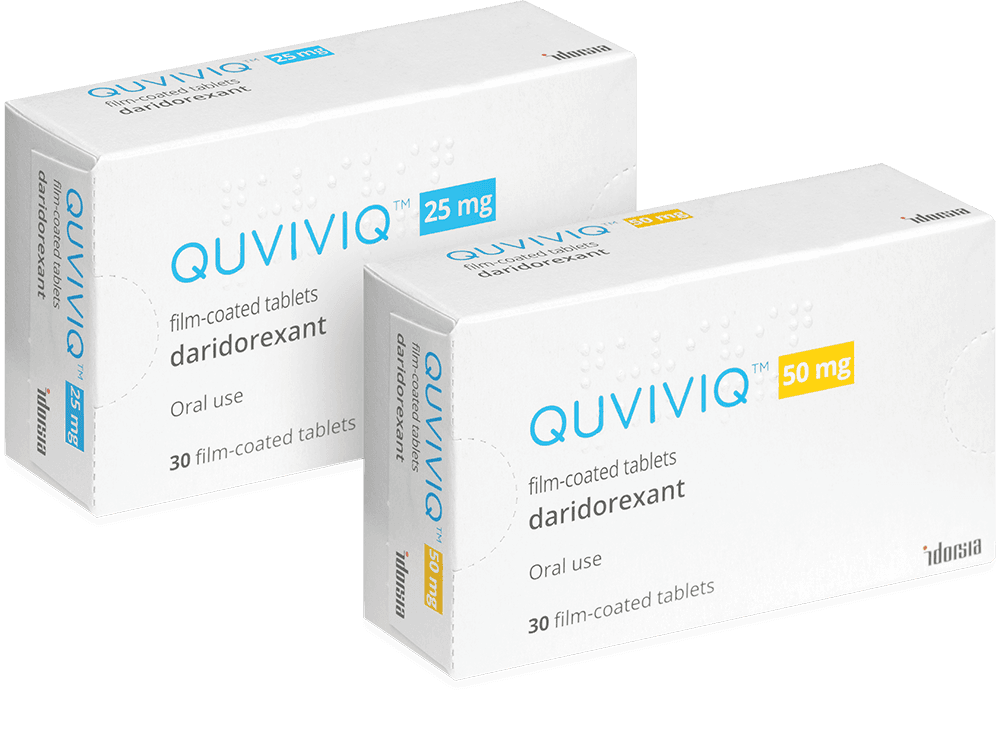

A different kind of sleep medicine
What is Quviviq and how does it work
Quviviq is a prescription medicine for adults with insomnia. Its active ingredient is daridorexant, a dual orexin receptor antagonist. Orexin is a brain chemical that promotes wakefulness. In chronic insomnia, the orexin system can remain overactive at night, keeping the brain alert when the body is physically tired. Quviviq works by temporarily blocking orexin receptors, reducing this sustained wake signal.1
Unlike older sleep medications such as benzodiazepines and z-drugs, which broadly suppress the central nervous system, Quviviq targets the wakefulness mechanism more specifically. This produces a different pharmacological profile. However, it is not free of side effects and is not suitable for everyone.
Quviviq may be prescribed in Derby and elsewhere in the UK for adults with insomnia that has lasted at least three months and has a considerable impact on daily life. A clinical assessment is required to confirm it is appropriate for you.
Is Quviviq right for you?
NICE eligibility and suitability
Based on the Quviviq licence and NICE-aligned prescribing criteria, daridorexant may be considered for adults who meet all of the following:
A clinical assessment is typically used to identify any contraindications, drug interactions, or contributing conditions that need addressing.
Persistent difficulty falling asleep despite feeling tired
Waking frequently during the night and struggling to return to sleep
- Waking significantly earlier than intended
Daytime fatigue, difficulty concentrating, or low mood connected to poor sleep
Sleep difficulties present for at least three months, at least three nights per week
First-line approaches including CBT-I have not worked or are not accessible
Not everyone with these symptoms will be eligible. Assessment includes screening for sleep apnoea, restless legs syndrome, and mental health and medication factors that can contribute to or mimic insomnia.3
When extra care is needed
Who cannot take Quviviq
Quviviq should not be taken by people with narcolepsy, or by anyone who is allergic to daridorexant or any of the ingredients in the medicine. It is not intended for children or adolescents, as safety and effectiveness have not been established in this age group.
Quviviq should not be taken with certain medicines that can strongly affect how it is broken down in the body. These include itraconazole, clarithromycin and ritonavir.1 Taking Quviviq with these medicines may not be safe.
If you are considering Quviviq in Derby or elsewhere in the UK, extra care is also needed if you:
- Have severe liver disease, as Quviviq has not been properly studied in people with this condition and is not recommended
- Have moderate liver disease, as a lower 25mg dose may be needed
- Have symptoms that could suggest obstructive sleep apnoea
- Have a current mental health condition, or one that has recently been unstable
- Have a history of alcohol or drug misuse
- Are pregnant, as Quviviq should only be used if the expected benefit clearly outweighs the possible risk
- Are breastfeeding, as it may cause excessive sleepiness in the baby
- Are over 75, as there is limited information about safety and effectiveness in this age group
- Have severe COPD
Getting a prescription in Derby
How to access Quviviq in Derby
Quviviq cannot be purchased without a clinical assessment by a UK-registered prescriber. Derby Sleep Clinic has partnered with The Independent Pharmacy to offer an assessment that is entirely online. It is a structured consultation designed to confirm an insomnia diagnosis, assess daytime impact, identify contributing factors, screen for contraindications and drug interactions, and determine whether Quviviq is appropriate.
No GP referral is needed to complete the assessment. If you are currently seeing a GP or mental health professional for your sleep or mental health, it is good practice to let them know you are seeking a private prescription.
What to expect from treatment
How Quviviq works over time
Quviviq may not give you a better night's sleep from the very first dose. Some people notice changes sooner, but for many people the improvement is more gradual. People may start to sleep better after about one week of treatment, and continue to improve falling asleep, staying asleep and feeling better during the day over a month.
Clinical studies in adults with insomnia showed that daridorexant, the active ingredient in Quviviq, improved sleep and daytime functioning compared with placebo after one month and three months of treatment. Clinical data supports treatment for up to 12 months.1
Your treatment should be reviewed within three months to check whether it is working and still suitable for you. If there is no clear benefit by then, your prescriber may decide that Quviviq is not the right treatment to continue.2
Ongoing prescribing is not automatic. It depends on whether you are getting meaningful benefit, whether you are tolerating the medicine, and whether it remains clinically appropriate. In clinical trials, people did not experience rebound worsening of insomnia after stopping Quviviq at the recommended doses. For suitable patients in Derby and across the UK, treatment can usually be stopped without gradually reducing the dose.
Your journey with Quviviq
How Derby Sleep Clinic supports you

Online assessment
Complete a structured online clinical assessment covering your symptoms, sleep history, medical background and current medications. A UK-registered clinician at our partner pharmacy, The Independent Pharmacy, reviews your answers and decides whether Quviviq is suitable for you, with clear guidance on dosage and timing.
Today

Starting treatment
Take one tablet approximately 30 minutes before bed, ensuring at least 7 hours for sleep. Avoid alcohol, grapefruit, and other sedatives. Do not drive for at least 9 hours after taking Quviviq, particularly in the first days of treatment. If you experience unusual or distressing side effects, such as sleepwalking, sleep paralysis, or mood changes, stop the treatment and contact your prescriber. If you forget to take it, do not take it later in the night.
Your first few weeks

Review within 3 months
Treatment is reviewed within three months to assess whether Quviviq is working effectively and continues to be appropriate. If sleep has not improved meaningfully or there are tolerability concerns, the prescriber reassesses whether to continue. If your symptoms change or new concerns arise, including mood changes, new sleep symptoms, or concerns about other health factors, contact your prescriber.
Ongoing review
Important safety information
Medicines, precautions, and side effects
Before starting treatment, read the Quviviq patient information leaflet carefully. It explains how to take Quviviq, possible side effects, when to seek help, and important safety information specific to daridorexant.
Some medicines should not be taken with Quviviq because they can make Quviviq build up too much in the body. These include itraconazole, clarithromycin, ritonavir and some other HIV medicines. If you are taking any of these, Quviviq will not be prescribed.
If you take certain other medicines, such as erythromycin or ciprofloxacin, you may need the lower 25mg dose of Quviviq.
Some medicines can make Quviviq less effective by reducing the amount of it in your blood. These include carbamazepine, phenytoin, rifampicin and St John's wort. Tell your prescriber if you take any of these.
Quviviq is not usually taken with other medicines that make you sleepy. This includes benzodiazepines, z-drugs such as zopiclone or zolpidem, opioids and pregabalin. Taking these together can increase drowsiness and make accidents more likely. If you already take any of these medicines, a clinician will need to review this before Quviviq can be considered.
You should not drink alcohol while taking Quviviq, as it can make the sedative effects much stronger and affect coordination, reaction time and judgement.
You should also avoid grapefruit or grapefruit juice in the evening while taking Quviviq.
Driving and using machinery
Quviviq can affect your ability to drive, use tools or operate machinery, especially when you first start treatment. You must leave at least 9 hours between taking Quviviq and driving or using machinery. Do not drive unless you feel fully awake and alert.
If your job or daily routine requires a high level of concentration, speak to your prescriber before starting treatment.
Possible side effects
Common side effects (may include up to 1 in 10 people) include headache, daytime drowsiness, dizziness, feeling sick and tiredness. These are usually mild to moderate, and most people taking Quviviq don't experience any of them.
Uncommon side effects (may affect up to 1 in 100 people) include sleep paralysis, which is a temporary inability to move or speak when falling asleep or waking up, and briefly seeing or hearing things that aren't there as you fall asleep or wake up. Vivid or unusual dreams can also happen. These are more likely in the first few weeks of treatment, and usually settle.
If these side effects are distressing, do not go away, or feel concerning, stop taking Quviviq and contact your prescriber. You can report suspected side effects through the MHRA Yellow Card scheme.
Mood changes and suicidal thoughts
A small number of people in clinical trials reported suicidal thoughts, especially those who already had mental health conditions.
If you notice worsening depression, new or worsening thoughts of self-harm, or major changes in mood or behaviour while taking Quviviq, stop taking it and seek urgent medical advice. If you feel unsafe, call 999 or go to A&E immediately.
Liver and kidney problems
Quviviq is not recommended for people with severe liver disease, as it has not been properly studied in this group. If you have moderate liver disease, the dose is reduced to 25mg. No dose change is needed for mild liver disease or kidney disease.
Risk of misuse
Clinical trials have not shown physical dependence or withdrawal effects when used at recommended doses.
However, people with a history of alcohol or substance misuse may have a higher risk of misusing it. This will be considered as part of the prescribing assessment.
When to get help
Some symptoms or changes while taking Quviviq need urgent attention.
- Thoughts of suicide or self-harm – call 999 or go to A&E immediately. You can also call Samaritans free on 116 123.
- Worsening mood, new mental health symptoms, or feeling unsafe – stop taking Quviviq and contact your GP urgently, or call NHS 111.
- New or worsening snoring, pauses in breathing during sleep, or severe daytime sleepiness – contact your prescriber, as these may be signs of sleep apnoea.4
- Feeling dangerously sleepy while driving, working, or using machinery – stop the activity straight away and contact your prescriber.
- Sleepwalking, acting out dreams, or unusual behaviour while asleep – stop taking Quviviq and ask for a clinical review.
- Possible overdose – call NHS 111 urgently or 999 if you experience severe symptoms, collapse, breathing difficulty, or unsafe levels of drowsiness. There is no specific antidote for Quviviq overdose, so treatment focuses on managing symptoms and keeping you safe.
Learn about Quviviq for insomnia
Quviviq in Derby – your questions answered
Quviviq is a prescription medicine containing daridorexant, licensed in the UK for adults with insomnia where symptoms have been present for at least three months with considerable impact on daytime functioning. For suitable adults in Derby, it may be prescribed to help reduce the brain signals that maintain wakefulness. It is not a sedative in the traditional sense and works differently from older sleep medications.
CBT-I is the most effective long-term treatment for chronic insomnia and is recommended as first-line by NICE. In Derby, prescription medication is typically considered where CBT-I has not been effective, is not accessible, or is not suitable. If you have not yet tried CBT-I, this is worth exploring – NHS Talking Therapies and digital programmes such as Sleepio offer access at low or no cost. Your assessment will explore what approaches you have already tried.
Older sleep medications such as benzodiazepines and z-drugs suppress the central nervous system broadly. Quviviq targets the orexin wakefulness system more specifically. Clinical trials have not shown evidence of physical dependence or rebound insomnia, which distinguishes it from older hypnotics. However, Quviviq is still a prescription medicine with its own side effects and is not suitable for everyone.
Clinical trials of Quviviq have not shown evidence of physical dependence or withdrawal effects at therapeutic doses. However, people with a history of dependence on alcohol or other substances may be at greater risk. This is assessed as part of the prescribing process. Quviviq should always be used as prescribed and reviewed regularly.
Yes, but access in Derby may depend on local formulary arrangements and referral pathways. NICE recommends daridorexant for adults with long-term insomnia where symptoms have been present for at least three months, occur on three or more nights per week, have a considerable impact on daytime functioning, and where CBT-I has not worked, is not available, or is unsuitable. NHS access is usually through a GP or relevant NHS service, depending on local pathways. Derby Sleep Clinic offers a private prescribing route for those who prefer faster access.
Individual response varies. Clinical trial data showed statistically significant improvements in sleep onset, sleep maintenance, and daytime functioning by Month 1 and Month 3 compared with placebo. Some people notice changes within the first week or two; for others improvement builds more gradually. If there is no meaningful benefit after several weeks of correct use, contact your prescriber for review.
Common side effects (may affect up to 1 in 10 people) include headache, drowsiness, dizziness, nausea and fatigue. Uncommon side effects (may affect up to 1 in 100 people) include sleep paralysis and hallucinations as you fall asleep or wake up. Vivid or unusual dreams can also occur – mainly in the first weeks of treatment. Very rarely, medicines of this type have been linked to sleepwalking or doing things while not fully awake. Isolated cases of worsening mood and suicidal thoughts have been reported, mainly in people with pre-existing mental health conditions. If you experience worsening depression, thoughts of self-harm, or distressing sleep behaviours, stop Quviviq and seek medical advice urgently. If you feel unsafe, call 999 or go to A&E.
Quviviq is contraindicated in people with narcolepsy and in those taking strong CYP3A4 inhibitor medicines such as itraconazole, clarithromycin, or ritonavir. It is not prescribed for people with current suicidal ideation, recent psychiatric crisis, or active unstable mental health conditions. Caution is required in people over 75, those with moderate liver disease (dose reduction to 25mg), those with symptoms of sleep apnoea, and those with a history of substance misuse.
You must disclose all current medications before starting Quviviq. Strong CYP3A4 inhibitors including itraconazole, clarithromycin, and ritonavir are contraindicated. Moderate inhibitors such as erythromycin require a reduced 25mg dose. Medicines such as carbamazepine, phenytoin, and St John's wort reduce the effectiveness of Quviviq. Quviviq should not normally be combined with benzodiazepines, z-drugs, opioids, or pregabalin. Alcohol must be avoided. Grapefruit should be avoided in the evening.
Quviviq should be used for the shortest effective duration. Treatment must be reviewed within three months to confirm it is working and remains appropriate. If the benefit is not clear, prescribing should be stopped. Clinical data support use for up to 12 months. Ongoing prescribing is not automatic and requires evidence of continued benefit and acceptable tolerability.
If you forget to take Quviviq at bedtime, do not take it later in the night. Wait until the following evening. Never take more than one dose in 24 hours. If you suspect you or someone else has taken too much, call 999 or NHS 111.
About the author

Andy Boysan
BPharm (Hons) · GPhC Registered Pharmacist
Andy Boysan is a GPhC-registered pharmacist and co-founder of The Independent Pharmacy, with over 30 years’ experience across community pharmacy and specialist settings. His expertise covers clinical governance and regulatory compliance, patient safety and quality improvement, and medicines management and optimisation.
Andy graduated from the University of Bath in 1997 with a BPharm (Hons) in Pharmacy. He has held senior leadership roles managing individual pharmacies, clusters and wider regions for major national chains, with responsibility for performance, regulatory compliance and standards of patient care.
He now leads the clinical and operational strategy at The Independent Pharmacy, overseeing regulatory compliance and ensuring the pharmacy operates to high standards of quality and governance.
- Professional registration
- GPhC 2047716 (General Pharmaceutical Council)
- BPharm (Hons), University of Bath
Medically reviewed
This page was last medically reviewed by Suzannah Torres on .

Suzannah Torres
RPSGT · AHCS Registered Clinical Physiologist
Derby Sleep Clinic is committed to providing clear, accurate and evidence-based information about sleep health, insomnia, sleep apnoea and related conditions.
Our content is regularly reviewed and updated to reflect current UK clinical guidelines, including recommendations from NICE. All treatment pathways described on this website are subject to individual clinical assessment and review.
Read our editorial policy to see how our content is written, reviewed and kept up to date.